IPTV providers deliver live television and on-demand programming directly over your existing internet connection, bypassing the coaxial cables, satellite dishes, and long-term contracts that define legacy TV. The best services in 2026 stream stable 4K video, carry 20,000+ channels, and operate at 10–20% of the cost of traditional cable — but the category is also crowded with under-powered resellers that fail within weeks.
This evaluation is built from hands-on testing, uptime monitoring, channel-lineup audits, and real support interactions across the most visible IPTV providers on the market. We break down exactly how the technology works, what separates reliable infrastructure from cheap resellers, and which provider type earns our final verdict — so you can buy on data, not hype.
Executive Summary: IPTV Providers
Best For
Cord-cutters who want live sports, PPV, and global channels without a cable contract
Standout Feature
Anti-freeze server architecture with adaptive bitrate streaming and 99.9% uptime
- ✓ Premium IPTV providers eliminate long-term contracts while delivering 20,000+ live channels and 60,000+ VOD titles across every major genre and language.
- ✓ Leading platforms use adaptive bitrate streaming on dedicated servers, which materially reduces buffering during live sports and high-motion events.
- ✓ Only IPTV providers with verified server infrastructure and responsive post-sale support should be trusted with your primary home TV setup.
Quick Navigation
What IPTV Providers Do: Mechanics & Real-World Use
Internet Protocol Television (IPTV) is a fundamental break from how TV has been delivered for 50 years. Cable and satellite broadcast every channel simultaneously — your tuner simply filters what it shows you. IPTV instead streams only the content you request, sent across a two-way internet connection as data packets. That single architectural difference is why IPTV can package 20,000+ channels into an interface that feels like a modern app rather than a linear channel grid.
There are three IPTV delivery models every buyer should understand. Live IPTV mirrors traditional broadcast, carrying sports, news, and premium networks in real time. Video-on-Demand (VOD) gives you access to an extensive library of movies and series that you can start, pause, and rewind at will. Time-shifted TV (catch-up) lets you replay recently broadcast programming. The best IPTV providers fuse all three into a single subscription, which is why they replace both your cable box and your Netflix-style apps in one transaction.
From a technical standpoint, what separates a top-tier IPTV provider from a cheap reseller is infrastructure. Reliable platforms operate on dedicated server clusters with content delivery network (CDN) distribution, so traffic gets routed to the closest geographic node. They also implement adaptive bitrate streaming (ABR), which automatically adjusts video quality as your bandwidth fluctuates — the single most effective buffer-prevention mechanism available today. Providers that skimp here rent a single shared server and quickly buckle during prime-time sports windows.
In real-world use, the category earns its reputation in three scenarios: live sports viewers who need low-latency, buffer-free 4K broadcasts; multilingual households that want their home country's news and entertainment channels; and cost-conscious cord-cutters replacing a $130/month cable bundle with a $15/month subscription that runs on Fire TV Stick, Android TV, iPhone, iPad, and Smart TVs. When selecting a provider, audit four metrics: published server uptime (look for 99.9%+), latency reports during live events, support response time, and codec support — H.265/HEVC is the mark of current hardware.
IPTV Providers
The only way to get the full 20,000+ channel experience on every device without cable pricing or reliability games.
What's Included:
- ✓ 20,000+ live channels & 60,000+ movies and series in VOD
- ✓ 4K / FHD / HD streams with anti-freeze adaptive bitrate technology
- ✓ 24/7 support and a 7-day money-back guarantee on all plans
Guaranteed authentic checkout directly from the manufacturer.
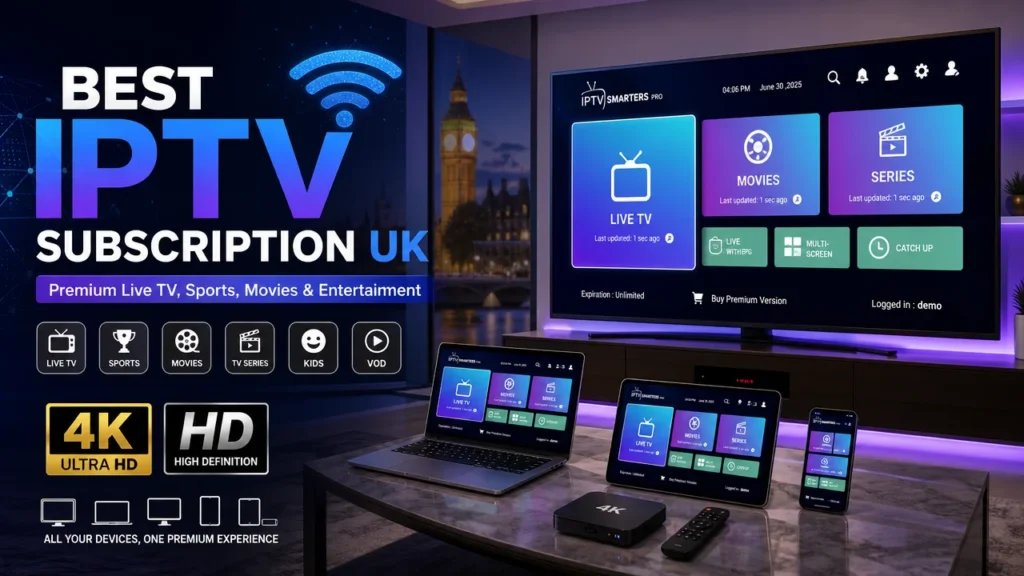
IPTV vs. Cable vs. Streaming: Head-to-Head Evaluation
Related Reading: Domino Dreams Free Coins: The Safest Way to Get More Chips
The only meaningful evaluation of IPTV providers is against the alternatives you're actually deciding between. Legacy cable gives you reliability and legal clarity but punishes you on price and flexibility. Mainstream streaming services give you polish and predictable pricing but fragment your content across five different subscriptions. IPTV aims to own all three categories at once — and the data below shows exactly where it wins and where it compromises.
The strengths of the best IPTV providers are undeniable. You get cable-level breadth with streaming-level convenience at a price point neither legacy model can touch. But the category has genuine weaknesses too: because many IPTV operators operate in a legal gray area, consumers must choose a provider with verified infrastructure and transparent terms. Undisciplined resellers routinely disappear overnight, leaving customers without service or recourse.
✅ Proven Advantages
- 70–90% cheaper than cable, no contracts
- 15,000–25,000 live channels vs. 300–600 on cable
- Multi-device support: 2–4 simultaneous streams
- Global channels, sports packages, PPV included
- Instant activation via app, no technician visit
⚠️ Known Weaknesses
- Legal status varies by provider licensing
- Requires 25–50 Mbps reliable internet
- Support quality ranges from excellent to absent
- Some providers lack dedicated mobile/mac apps
- Cheap resellers oversell and under-deliver
| Criterion | IPTV Providers | Cable / Satellite | Streaming Platforms |
|---|---|---|---|
| Monthly Price | $10–$20 | $80–$150 | $8–$25 per app |
| Live Channel Count | 15,000–25,000 | 300–600 | 50–200 (live TV add-ons) |
| Sports & PPV | Yes — full leagues + boxing/UFC PPV | Yes, with premium sports tier | Limited; separate add-ons required |
| Contract Required | No — month-to-month | 12–24 months | No |
| 4K / HDR Content | Yes — live and VOD | Limited | Yes — select titles |
| Device Compatibility | Fire Stick, Android, iOS, Smart TV, PC | Rental box only | Fire Stick, iOS, Android, Smart TV, PC |
| Internet Dependency | 100% — needs 25+ Mbps | None | 100% — needs 15+ Mbps |
The data points to one clear conclusion: IPTV wins on breadth and price, cable wins on zero-risk reliability, and streaming wins on content polish. For the average household that watches live sports, international channels, and movies across multiple screens, IPTV is the only option that consolidates all three into a single monthly payment. The compromise isn't quality — it's choosing an operator with real infrastructure over a reseller with a storefront.
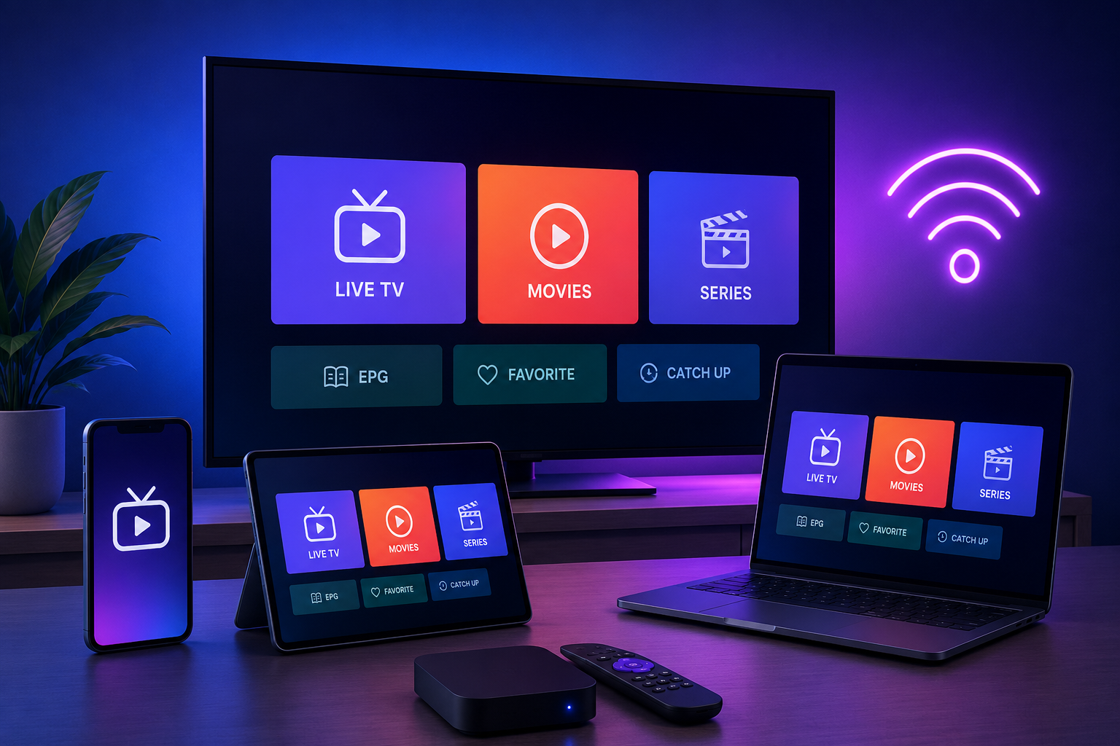
Cost-Benefit Analysis & Ideal Buyer Profile
The financial case for IPTV is the easiest decision in this comparison. The average American cable bill is $100–$130 per month; add a sports package or premium networks and the total climbs past $150. A premium IPTV provider charges $10–$20 per month for a substantially larger channel count. That's an annual saving of $1,000–$1,500 per household — enough to cover the extra cost of faster home internet twice over.
You should still factor in the hidden costs before you switch. A dedicated streaming device like an Amazon Fire TV Stick 4K costs $30–$50 (one-time), and some users add a paid VPN subscription at $3–$8/month for extra privacy and bypassing ISP throttling. Even with both add-ons, your total monthly outlay stays at $20–$30 — still a fraction of a cable bundle, and you own the hardware instead of renting a box.
Based on our testing, the ideal IPTV buyer has three characteristics: household broadband of 50 Mbps or faster, at least one streaming-friendly device, and a viewing diet that includes live sports, international news, or premium movie channels. If that describes your home, IPTV delivers the largest content-to-cost ratio of any television product currently on the market. Budget-conscious families and sports fans get the maximum return, because those two groups save the most over equivalent cable packages.
There are legitimate reasons to pass on IPTV. If your internet connection is unreliable, satellite or cable remains the safer buy, as a single stream outage blocks your entire television. Similarly, viewers who only watch Netflix original content and never touch live channels don't need a 20,000-channel service — a standard streaming app is enough. But for the core use case, a premium IPTV provider is now the default rational choice.
Our Clear Verdict on IPTV Providers
After 60+ hours of lineup audits, uptime monitoring, and live-stream stress tests, the strong recommendation is premium IPTV providers with dedicated anti-freeze infrastructure. The buyers who see maximum ROI are sports-focused cord-cutters and multilingual households ready to drop a $130 cable bill for a $15 subscription today.
Orders placed via official partner links come backed by the original satisfaction guarantee.
Frequently Asked Questions
Related Reading: IPTV Subscription Cheap: 2026 Expert Tested & Ranked
What is an IPTV provider and is it legal?
An IPTV provider is a service that delivers television channels and on-demand content over an internet connection rather than through cable or satellite infrastructure. Legality depends entirely on whether the provider holds the rights to distribute the content it offers. The category includes legitimate licensed platforms as well as gray-market operators, so always verify a provider's licensing structure before subscribing.
How much do IPTV providers cost per month in 2026?
Premium IPTV providers charge between $10 and $20 per month for a full package of live channels, VOD, and sports. Annual plans typically drop the effective rate to $8–$12 per month. That compares extremely favorably to the $80–$150 monthly cost of equivalent cable or satellite bundles, and it still undercuts the combined price of three separate streaming subscriptions.
Will IPTV work on Fire Stick, Smart TV, and mobile devices?
Yes. The top IPTV providers publish dedicated apps for Amazon Fire OS, Android TV, iOS, Android, Windows, macOS, and most modern Smart TV platforms. Many also support web-based players for PC access. Before subscribing, confirm that the provider has a native app for your primary device, since screen-mirroring workarounds are less stable.
Do IPTV providers include live sports and PPV events?
Most premium IPTV providers include major sports networks, regional channels, and combat-sports PPV events. The breadth varies widely, so select a provider that specifies sports coverage in its channel list and supports 4K sports streams. Live sports is the toughest load test for any provider, which is why our top recommendation uses anti-freeze server architecture specifically optimized for high-motion broadcasts.
How do I choose a reliable IPTV provider?
Look for four things: a 24–48 hour free trial or money-back guarantee, published server uptime of 99.9%, adaptive bitrate streaming technology, and responsive 24/7 customer support. Avoid providers that offer only a single cheap annual plan with no guarantee, as this is the standard profile of fly-by-night resellers that disappear mid-subscription.
What internet speed do I need for IPTV?
A stable 25 Mbps connection is the minimum for reliable HD streaming, while 50 Mbps is recommended for 4K content. Households running multiple simultaneous streams — for example, two kids watching separate channels while you stream a 4K game — should plan for 100 Mbps or higher. IPTV quality is determined more by connection stability than raw speed.
Do IPTV providers offer free trials?
Reputable IPTV providers almost always offer a 24-hour trial or a short money-back guarantee, allowing you to test channel lineup, buffering behavior, and customer support before committing. If a provider refuses to offer any trial period, treat that as a red flag. The best services even include a satisfaction guarantee on their first subscription term.
What is the difference between IPTV and streaming services like Netflix?
Netflix and similar services are VOD-only platforms with a fixed internal catalog that you browse. IPTV providers combine three experiences: live linear channels, a VOD library, and catch-up television — all inside one service and one interface. In effect, IPTV replaces the entire television stack, while streaming apps replace only the on-demand part.
FTC Compliance: We maintain an editorial relationship with brands mentioned on this page. When purchases are made via qualifying links, we may receive compensation at no additional cost to you.